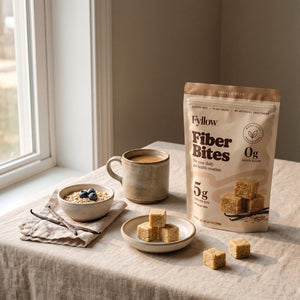
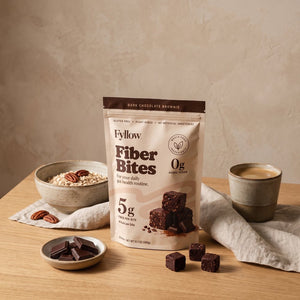
The nutrient most of us forget.
Fiber keeps your digestion moving, feeds your gut and keeps you full. And almost everyone eats too little of it. Here is what that means, and how to fix it without effort.
Most of us have a fiber gap.
of adults don't get the fiber they need.
felt it this week: bloating, irregularity, discomfort.
Sources: Quagliani & Felt-Gunderson, Am J Lifestyle Med 2017 · Almario et al., Am J Gastroenterol 2018 (US data)
Close your gap
Too little fiber adds up.
Fiber is the part of plant food your body can't digest. That's exactly the point. It gives your digestion structure, feeds the bacteria in your gut and slows down how fast you absorb a meal. Most of us eat about a third less than we need. You rarely notice it on one day. You feel it over weeks.
Things slow down
Fiber adds bulk and holds on to water. With too little, digestion gets slower and less predictable.
Bloated and heavy
A slow, irregular rhythm is one of the most common reasons people feel heavy or bloated.
Hungry again, sooner
Low-fiber meals digest fast. You feel full for a shorter time and reach for a snack sooner.
Up and down energy
Without fiber, sugar from a meal reaches your blood faster. What goes up fast tends to come down fast.
A hungry microbiome
The good bacteria in your gut live on fiber. Give them less, and they have less to work with.
The long run
Large reviews link higher fiber intake with a lower risk of heart disease, type 2 diabetes and colorectal cancer.
Why is it so hard?
Most fiber lives in foods we eat less of: whole grains, legumes, vegetables and nuts. Modern food is quick, soft and refined. And most fiber supplements are powders or pills you forget about after a week.
The easy fix.
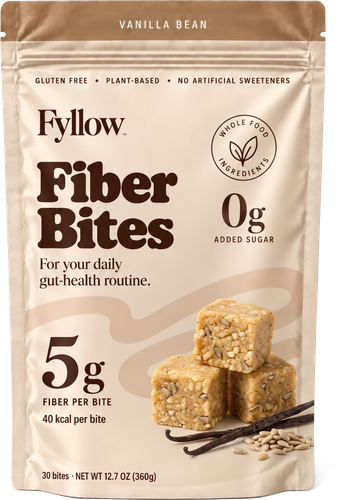
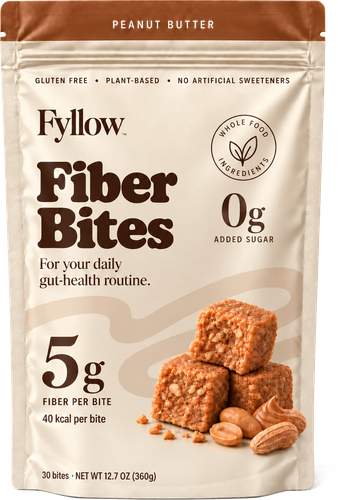
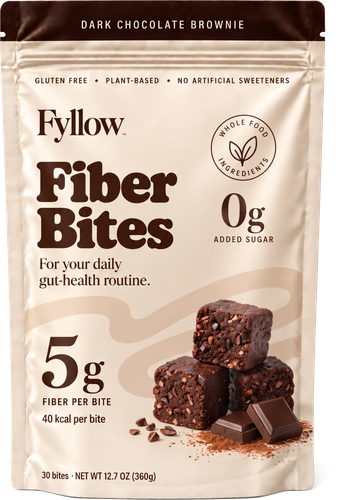
Close the gap with food you look forward to. One Fiber Bite gives you 5g of fiber. One to two a day covers the gap most people have.
Shop Fiber Bites →Sources: Reynolds et al., The Lancet 2019 · EFSA, dietary reference values for carbohydrates and fiber, 2010 · RIVM, Dutch National Food Consumption Survey 2019–2021. This is general information, not medical advice.
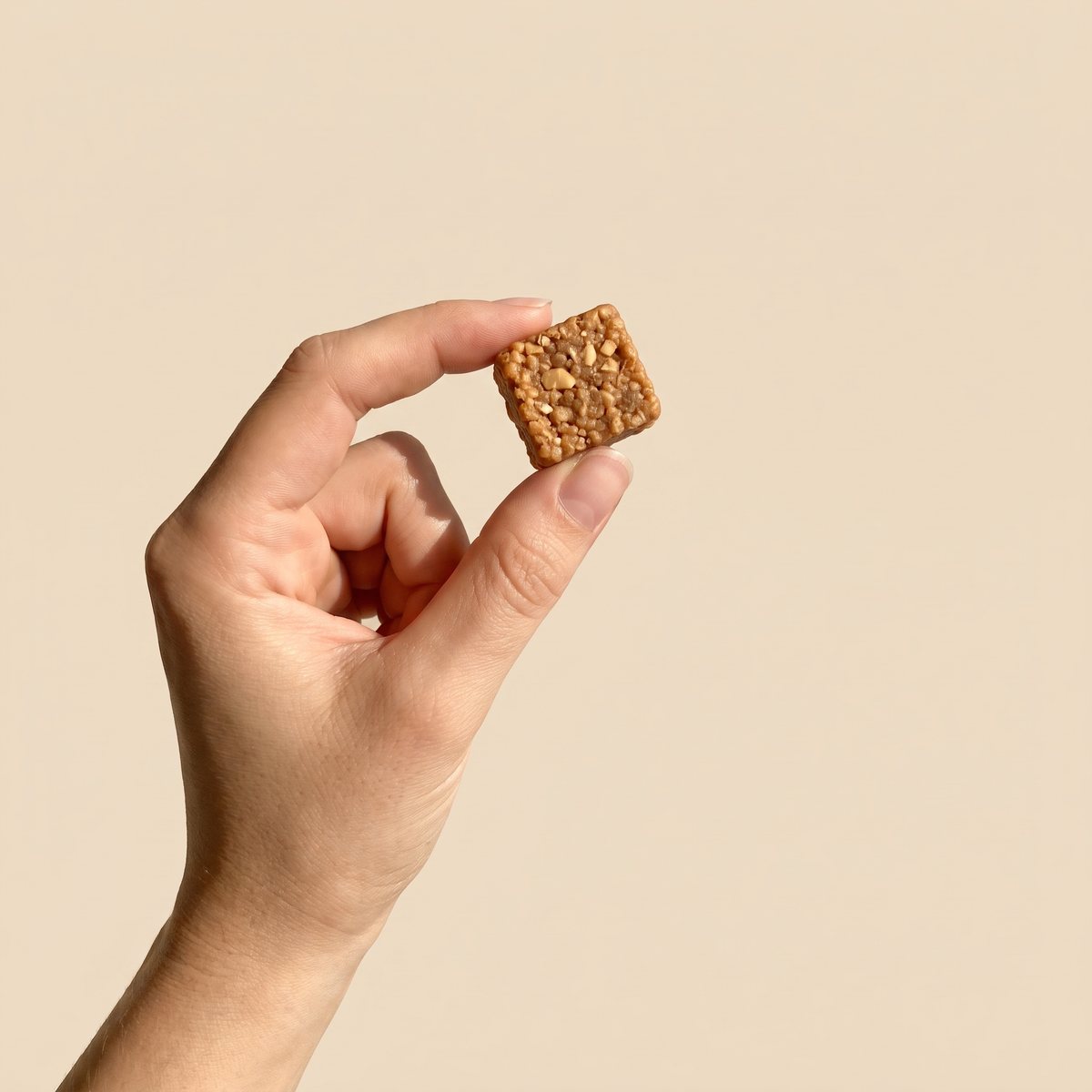
One bite.
All the benefits.
Different targets. Same gap.
Women and men need a different amount of fiber. On average, both fall about 7g short every day.
How many bites do you need?
It depends on how you eat. Each bite adds 5g of fiber. Start with one a day in week one and build up.
Estimates for guidance only. Recommended intakes: EFSA 2010 and Gezondheidsraad. Average intake: RIVM VCP 2019–2021. Ask your healthcare provider if you have a medical condition.
Questions, answered.
What are Fiber Bites?
Hand-pressed whole-food bites made from dates, oats and chicory root fiber. Each bite has 5g of fiber, 0g added sugar and 40 kcal.
How many bites should I eat?
Most people fall about 7g short on fiber every day. One to two bites a day closes that gap. Start with one bite a day in week one and build up.
When should I eat them?
Whenever suits your routine. With your morning coffee, after lunch or between meetings. Same time every day works best.
Will more fiber make me bloated?
A sudden jump in fiber can take some getting used to. That's why we suggest starting with one bite a day and drinking a glass of water with it.
Can I mix flavors?
Yes. Pick 1, 2 or 3 bags and choose any flavor for each bag.
Are they gluten free and plant-based?
Yes. All three flavors are gluten free and plant-based, with no artificial sweeteners.
What about allergens?
Peanut Butter contains peanuts. All flavors are made in a facility that processes peanuts and tree nuts.
Can I eat them on a GLP-1?
Fiber Bites are food, not medicine. They give you 5g of fiber in a small portion, which can help when your appetite is smaller. Ask your healthcare provider about your regimen.
How much is shipping?
Free shipping on orders from €50. Below that, shipping is €4.99.
How should I store them?
In a cool, dry place. Reseal the bag after opening.